Table of Contents
- How did Major Taylor’s Indiana roots shape his journey?
- How did “Major” Taylor get his famous nickname?
- What was Major Taylor’s approach to training and discipline?
- How did Major Taylor achieve racing glory and break records?
- Why is the Indiana State Museum the home for Major Taylor’s story?
- How does Major Taylor’s legacy connect to Indiana’s cultural heritage?
- How does the museum invite visitors into Major Taylor’s story?
Article Summary
Major Taylor’s rise from Indianapolis youth to world cycling champion is rooted in Indiana’s culture and history. The Indiana State Museum’s interactive exhibit explores his discipline, achievements, and legacy, inviting visitors to connect with his story and its impact on sports and society.
How did Major Taylor’s Indiana roots shape his journey?
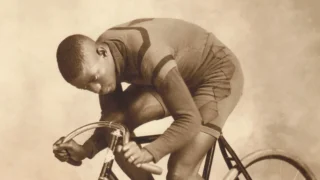
Marshall “Major” Taylor’s journey from Indianapolis teenager to the “Fastest Cyclist in the World” began right here in Indiana. The Indiana State Museum and Historic Sites (ISMHS) is the definitive home for his origin story. As assistant curator and social history specialist, I see the responsibility and privilege of telling this Hoosier champion’s story—from his Indianapolis roots to his rigorous training and record-setting victories—as central to how the museum invites visitors into his world.[1][2]
Marshall Walter “Major” Taylor was born in Marion County, Indiana, in 1878. He grew up in a city buzzing with late-19th-century cycling excitement. Before he was a world champion, he was a boy fascinated by bicycles, surrounded by a community where two-wheeled travel filled the streets and sparked new ideas about freedom.[4][2]
At ISMHS, the “MAJOR TAYLOR: Fastest Cyclist in the World” interactive experience anchors Taylor’s story in Indiana. Visitors first meet Taylor as a Hoosier—a local kid whose talent and determination reached far beyond Indianapolis.[1][3]
How did “Major” Taylor get his famous nickname?
Taylor’s nickname comes straight from his Indianapolis youth and an early job outside the Hay and Willits bicycle shop. Paid a dollar a day to perform bicycle tricks in a sharp, military-style uniform, he wowed passersby with his balance and control. That’s how he earned the nickname “Major”—a name that would follow him onto velodromes around the world.[2][4]
The exhibit uses this moment as a doorway into the broader story of Black life and opportunity in Indianapolis at the time. Through photos, period ads, and interactive media, the museum shows how a teenager doing trick riding for curious crowds became a disciplined athlete who would challenge the best racers of his era.[1][3]
What was Major Taylor’s approach to training and discipline?
Major Taylor’s title as the “fastest cyclist in the world” wasn’t just about talent. It was built on a strict regimen of exercise and diet, which he followed with almost scientific focus.[1][6] In the ISMHS interactive experience, visitors can step into a recreation of his training room. Hands-on and digital elements reveal how he honed his speed, strength, and strategy long before sports science was a field.[1][6]
Taylor summed up his philosophy simply: “Clean living and clean thinking will win.”[7][8] The exhibit connects his careful attention to rest, nutrition, and moral conduct with the explosive power he showed on the track.[8][9]
How did Major Taylor achieve racing glory and break records?
By the turn of the 20th century, Taylor was one of the most famous and highly paid athletes of his generation. He held world and national sprint titles, broke records, and raced before huge crowds. At times, he earned as much as $35,000 a year—a remarkable sum that made him one of the wealthiest Black men in the United States.[10][10]
The museum’s Major Taylor collection brings his athletic dominance to life with original artifacts, including one of his racing bicycles and trophies from European victories.[10][3] Standing in front of his bike, visitors can better appreciate the courage and control it took to reach such speeds on early, single-speed machines, often in hostile racing environments.[3][11]
“Major Taylor’s story is a testament to Indiana’s spirit of perseverance and innovation. The Indiana State Museum brings his journey to life, inspiring visitors to see how discipline and determination can break barriers and shape history.”
— Kisha Tandy, Indiana State Museum and Historic Sites
Why is the Indiana State Museum the home for Major Taylor’s story?
ISMHS is the primary institutional home for Taylor’s story, preserving a collection that includes his bicycle and many personal items donated by his daughter, Rita Sydney Taylor Brown.[10][11] Letters, scrapbooks, and race memorabilia allow the museum to move beyond statistics and headlines, offering a fuller, more intimate portrait of the man behind the legend.[10][2]
Educational tools like the Major Taylor Timeline Tour and the museum’s educator guide extend this collection’s reach into classrooms and community programs.[2][6] In each resource, Taylor’s Indianapolis roots and disciplined training remain central, reinforcing the message that this global champion’s story begins in Indiana and belongs to Indiana’s cultural heritage.[1][2]
How does Major Taylor’s legacy connect to Indiana’s cultural heritage?
Taylor’s career shows how a Hoosier athlete could rise from local tracks to global acclaim while challenging deep racial barriers.[3][4] His example highlights a broader theme in Indiana history: perseverance, integrity, and excellence can come from communities often excluded from power and recognition.[4][5]
Major Taylor himself hoped his success would show “all young Americans that it is possible to achieve the highest ambitions and the greatest dreams.”[7] At ISMHS, that message frames his life as both a sports story and a civic one, inviting visitors to see how his discipline and determination can inform today’s conversations about equity, opportunity, and representation in Indiana.[1][3]
How does the museum invite visitors into Major Taylor’s story?
The “Fastest Cyclist in the World” experience uses interactive elements to help visitors feel Taylor’s discipline and achievements in their own bodies.[1][4] From bike simulators where guests try to match his times, to hands-on stations exploring bicycle design and physics, the exhibit connects the science of speed with the human story of the athlete who mastered it.[3][5]
This first part of a five-part series focuses on origins and discipline: an Indianapolis childhood, a nickname earned on city streets, and a training philosophy built on clean living and focused effort.[1][2] Future parts will explore his fight against racism, family life, global travels, the museum’s collection, and the legacy that continues to shape Indianapolis today.[12][3]
Frequently Asked Questions
Major Taylor was an African American cyclist from Indianapolis who became the world’s fastest cyclist and a global sports icon in the early 20th century.
Visitors can see Taylor’s racing bicycle, trophies, personal memorabilia, and interactive displays that explore his training, achievements, and legacy.
He earned the nickname ‘Major’ as a teenager performing bicycle tricks in a military-style uniform outside a local bike shop in Indianapolis.
Major Taylor’s achievements broke racial barriers and highlighted the potential for excellence and perseverance in Indiana’s communities.
Footnotes
- Indiana State Museum and Historic Sites, “Major Taylor: Fastest Cyclist in the World” exhibit overview. [1]
- Indiana State Museum and Historic Sites, “Major Taylor – Fastest Cyclist in the World Educator Guide” (PDF). [2]
- IndyStar, coverage of “Major Taylor: Fastest Cyclist in the World” exhibit and Taylor’s Indianapolis roots and career. [3]
- WFYI, feature on the Indiana State Museum Major Taylor interactive cycling experience. [4]
- Bicycling Magazine, “A Look Inside the Major Taylor Exhibit at Indiana State Museum,” discussion of artifacts, bicycle, and visitor experience. [5]
- Visit Indiana, “Major Taylor: The World’s First African-American Sports Star,” overview of Taylor’s life and achievements. [6]
- Major Taylor Association and curated quote collections for “clean living and clean thinking will win” and other Taylor quotations. [7] [8] [9]
- Indiana State Museum social narratives and accessibility materials for the Major Taylor interactive experience. [10]
- External reporting and cycling history resources describing Taylor’s racing income, trophies, and international fame. [11] [12]