
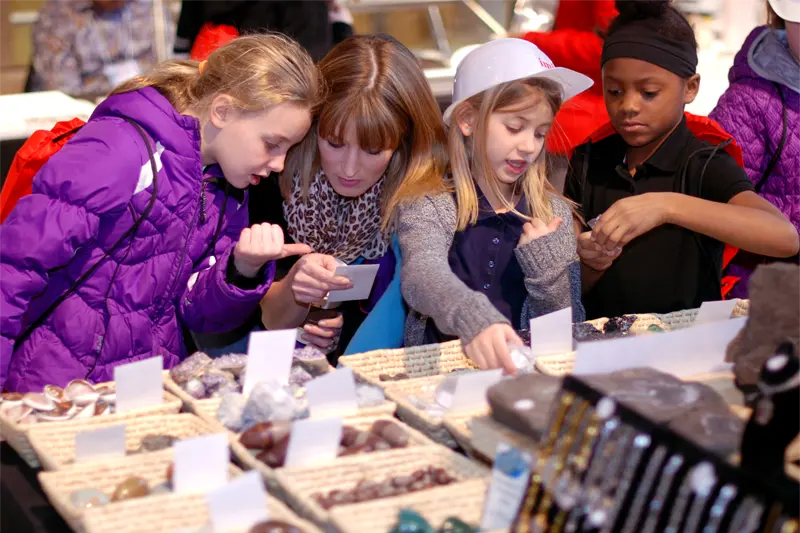
 Rocks. From monolithic natural formations in state parks to stone-built structures throughout cities and countless places in between, rocks are everywhere. Yet despite the profusion of pebbles around us — or perhaps because of it — rock collecting as a pastime is experiencing a resurgence in popularity.
“Rockhounding is a hobby where you can spend absolutely nothing on it but time — hunting for rocks outside — or as much as you want on beautiful specimens from a gem and mineral show or a shop,” said Curator of Geology Peggy Fisherkeller. “It also opens up the world. Not only can you find amazing things from all 50 states, but you can collect amethyst from Brazil, geodes from India, gems from Pakistan and so much more.”
For anyone looking to experience the marvels of minerals firsthand, GEOfest is the place to be. As one of our most popular and longest-running signature events, GEOfest inspires curiosity and ignites wonder about geology and the natural world. For three days, the Indiana State Museum will be transformed into a geological wonderland filled with crystals, fossils and rocks galore. Visitors can browse 25 booths of vendors from across the country, selling a variety of items to entice everyone from serious fossil enthusiasts to those with a casual curiosity about shiny stones.
With hands-on activities on all three floors, children will enjoy digging into Indiana’s Ice Age past and take home a trilobite paperweight from our event sponsor Irving Materials, Inc. As part of our year-long celebration of America’s 250th birthday, this year’s GEOfest will also offer activities that highlight Indiana’s geological history. Visitors can also learn about the passion past U.S. presidents like Thomas Jefferson, George Washington and James Madison had for fossil collecting. From the Founding Fathers to historic Hoosiers, the fascination with rock hunting goes back centuries, and the remarkable Troost Mineralogy Collection is great evidence of that.
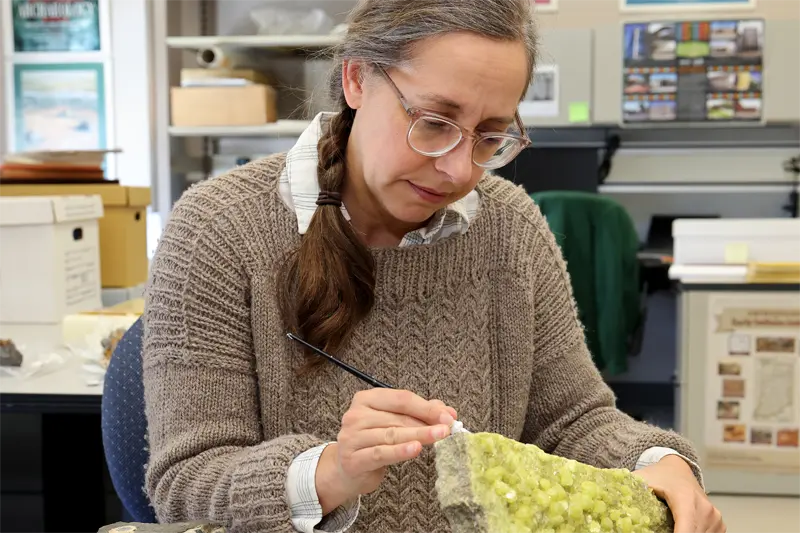
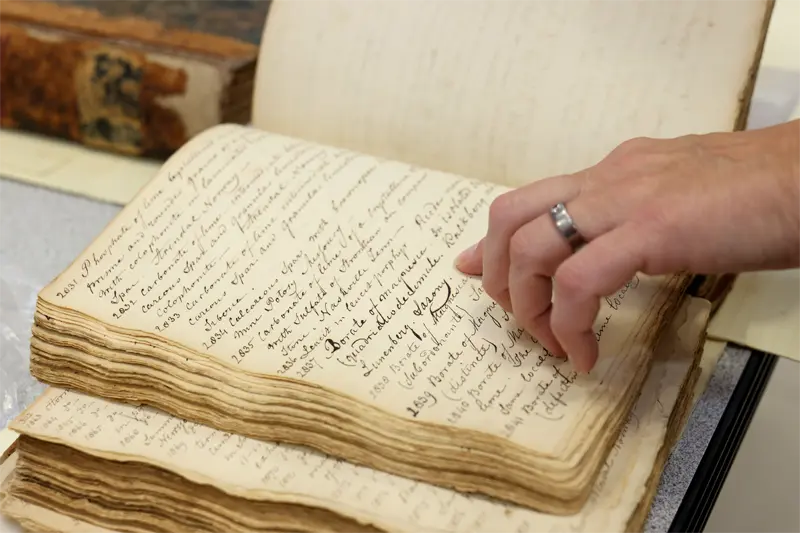 Gerard Troost was a prominent geologist and avid collector who was part of New Harmony’s Owenite utopian community from 1825-27. The Indiana State Museum and Historic Sites acquired around 6,500 pieces from the Troost collection from the Kentucky Science Center in 2024. Since then, Fisherkeller has led the effort to catalog the collection. With the help of volunteers as well as students from DePauw University, Fisherkeller has February 2026 been carefully washing, applying numbers, identifying and photographing each of the specimens. More recently, ISMHS also acquired Troost’s handwritten catalogs to accompany his collection. The two leather-bound volumes have been invaluable references during Fisherkeller’s work, and she has also gained some unique insights into Troost himself.
“One thing that has struck me as I’ve worked with the collection is just how rich and extensive Troost’s social network was,” she said, adding that Troost’s notes detail his travel and correspondence with scientists and other mineralogy enthusiasts throughout the U.S., Canada and Europe. Fisherkeller estimated it will take another year to finish the painstaking work of cataloging the Troost collection. Once complete, the collection can be made available online to researchers and the public, revealing new stories about the field of geology and the broader natural world. “I’m really happy this work is being done because it’s such an important collection,” said Fisherkeller. “It’s a nice piece of history that ties Indiana, especially New Harmony, to the greater scientific community in the 1800s.”


